
A beaver dam analogue (BDA) is a habitat management tool that mimics a naturally occurring beaver dam. It is a simple structure installed in-stream and is often installed in series. There are many different ways to build BDAs which can include: upright posts (natural or manufactured fence posts), a natural weave material (typically willow, spruce, or other on-site vegetation), gravel, mud, wood chips, and sod (see image below).
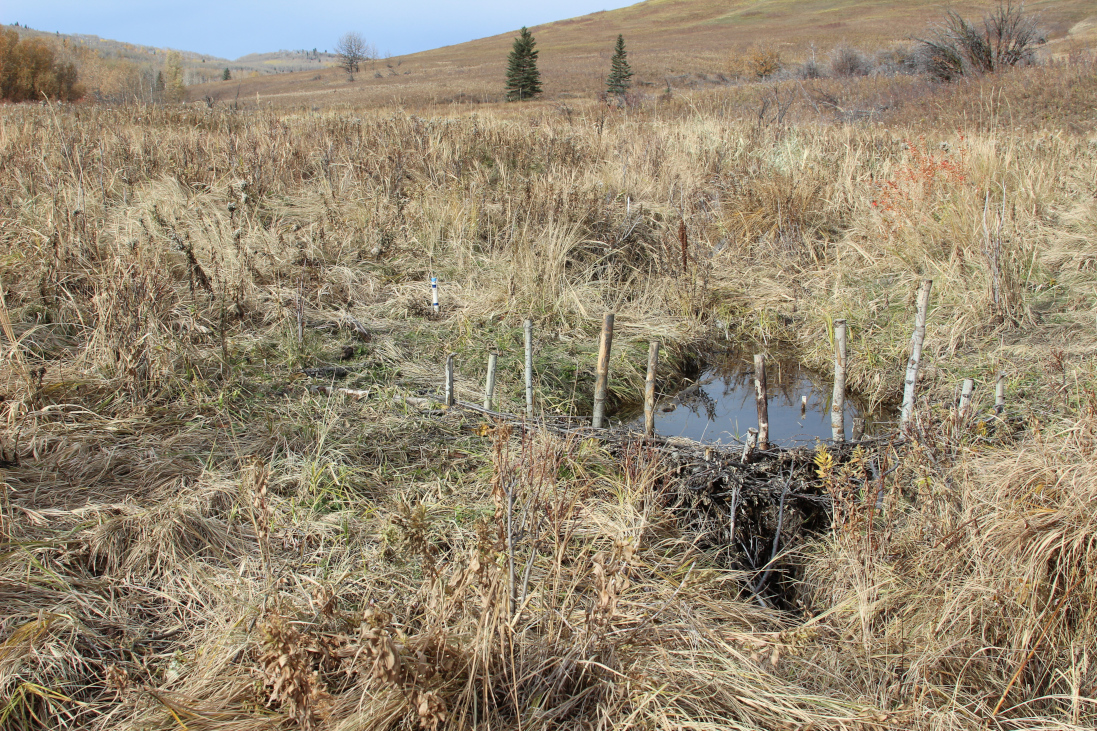
BDAs use depends on the project goal, but their main purpose is stream restoration in degraded riparian systems, and/or to encourage beavers to resume normal activities for the stream's benefit. BDAs can be used specifically for beaver and fish habitat restoration, general habitat restoration to benefit multiple species including species-at-risk, and to encourage natural beaver recolonization.
*Please note that prior to the installation of any coexistence tool, it is important to check for permitting requirements with your local, provincial/state, and federal departments*
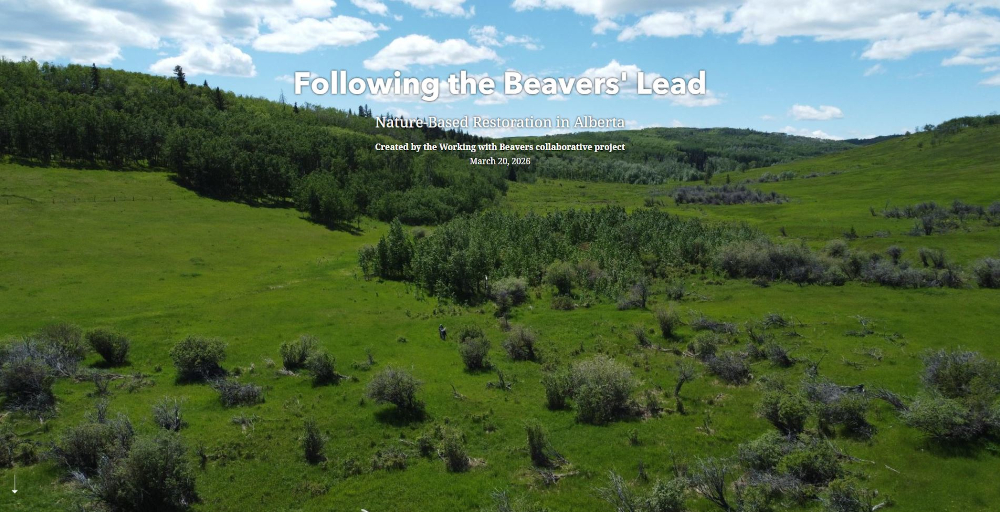
Following the Beavers' Lead: Nature-Based Restoration in Alberta
At Ann and Sandy Cross Conservation Area, along Pine Creek, a quiet restoration effort is underway - one inspired by nature's original engineers. This story follows how beaver dam analogues are being used to bring water back onto the landscape, rebuild habitat, and create the conditions for beavers to return. It's a story of restoration, resilience, and working with nature rather than against it.
Visit the Story Map now


If you are interested in learning more about BDAs, please see the resources below, visit the Low-Tech Process-Based Restoration of Riverscapes website, or send us an email.